
Learn with us
Our programs
Learn Korean. Build skills. Open opportunities.
- Basic Korean
- Comprehensive Korean
- EPS-TOPIK Preparation
- EPS-TOPIK Review
- EPS Skills Test Training
- Korean Language Crash Course
- Korean for Travel
- Korean Culture Classes
Learn Korean with Kaja to better understand the K-dramas and K-pop you love, connect in everyday conversations, or prepare for your EPS-TOPIK goals.
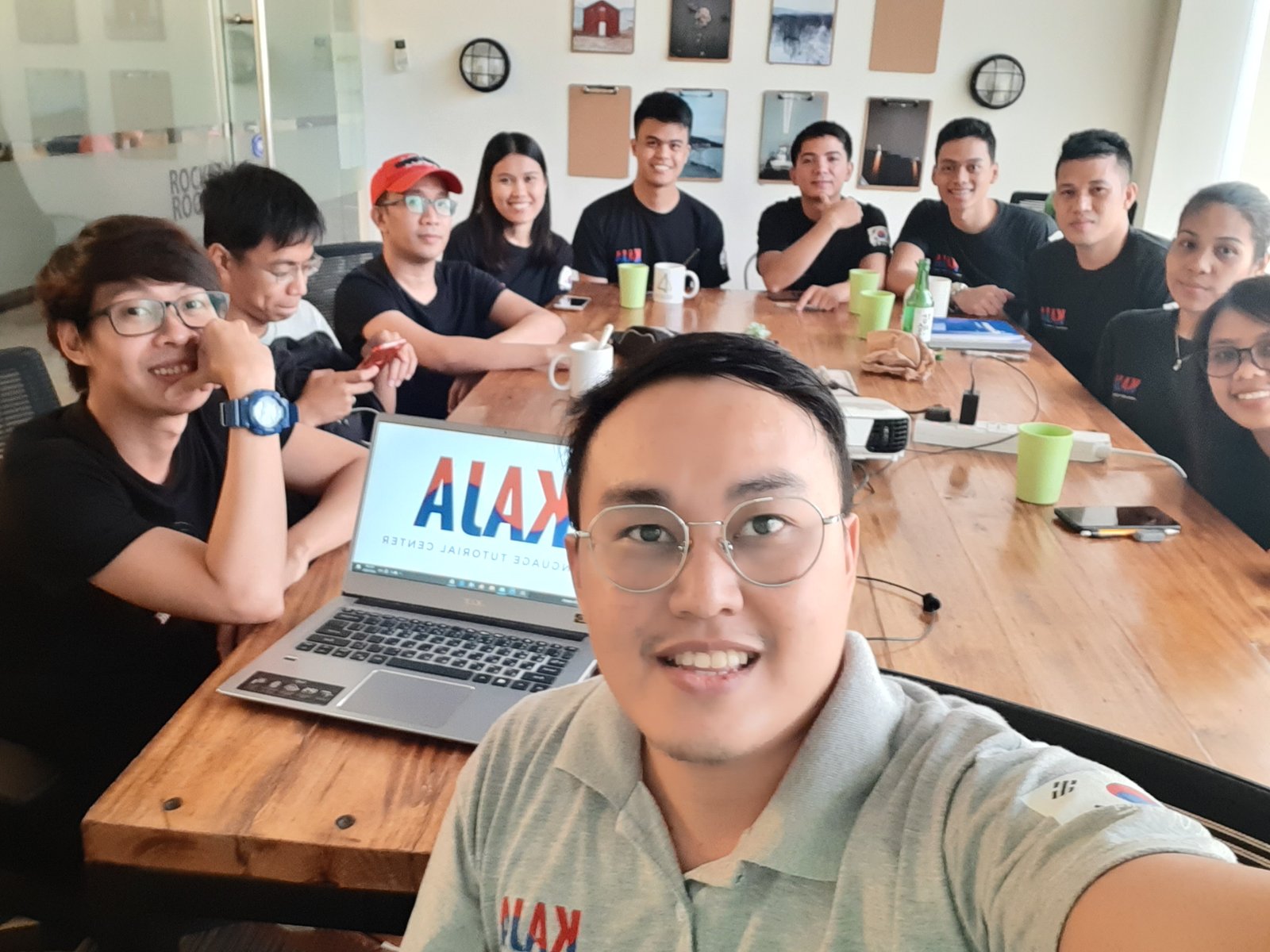
Build your Korean language skills for everyday conversation, travel, or EPS-TOPIK preparation—and understand more of your favorite K-dramas and K-pop along the way. Choose the learning format that fits you.
 In the classroom. On your screen.
Learn in person with guided lessons, practical exercises, and a community working toward the same goal.
Learn Korean, build your skills and explore new opportunities—with programs and language services for individuals and organizations.
Learn with us
Learn Korean. Build skills. Open opportunities.
Work with us
Professional Korean language solutions.
The Employment Permit System (EPS) is a South Korean government program that allows eligible foreign workers from partner countries to seek employment in participating industries.
EPS-TOPIK is the Korean language test used as part of the selection process. It assesses reading, listening and Korean used in everyday life and the workplace.
Applicants must still meet the relevant requirements and go through the official selection and employment process. Hiring depends on employer selection and other applicable conditions.
From preparation to employment
Requirements and schedules depend on the official announcement for your country and industry. This is a general guide, not a promise of placement.
Read the current announcement from the Philippine Department of Migrant Workers (DMW). If you meet its requirements, register through the official process during the stated period.
Study Korean for everyday life and the workplace. The exam assesses listening and reading; results and selection follow the criteria in the relevant announcement.
If required for your recruitment round, follow the official instructions for the skills test and any other screening. Passing the language exam alone does not complete the process.
Qualified applicants submit the required documents and complete any checks requested by the authorities. Only those accepted onto the roster can be considered through the applicable process.
Korean employers select from eligible job seekers. Waiting times vary, and being on the roster does not guarantee that an employer will choose you or make an offer.
If selected, review the employment contract and follow official instructions for the remaining medical, paperwork, visa and pre-departure requirements before travelling to Korea.
EPS can open an opportunity to work in Korea, but competition, eligibility checks, employer demand and processing times affect each applicant’s path. Passing a test or joining the roster is not the same as having a job offer. Be prepared for uncertainty and keep your documents and contact details current.
Use official announcements for fees, deadlines and instructions. Kaja can help you prepare for the language and skills tests; recruitment and hiring decisions are made through the official EPS process.
Build your Korean foundation through speaking, listening, reading and writing, with everyday conversations, culture and practice for EPS-TOPIK and TOPIK.
Download the complete course outline ↗Explore the chapters below, followed by review and a mock exam. Course details and schedules may change; contact Kaja for current information.
History of Hangeul; consonants and vowels; double final consonants; reading and writing rules.
Common classroom expressions.
Basic expressions.
Basic expressions.
Self-introductions; 입니다 and 입니까; countries and occupations; greeting manners.
Places and objects; subject–object–verb order; particles 은/는, 이/가, 을/를; 이에요/예요; floor-sitting etiquette.
Daily routines and time; present tense 아요/어요/해요; 에 for time; Korean and Sino-Korean numbers; appointments and time etiquette.
Family, appearance and personality; 하고; 에 for place; informal, formal and honorific forms.
Dates, weekdays, places and actions; past tense 았/었/했; 에서; Korean national holidays.
Buying goods, fruit and food; money; 주세요 and 아/어 주세요.
Locations and directions; movement verbs; (으)세요 and (으)로.
Making appointments; descriptive verbs; -고 싶다 and -(으)ㄹ까요?; promises in Korean greetings.
Ordering food; restaurants and tastes; -(으)ㄹ래요 and 안; different kinds of food.
Weather, seasons, feelings and moods; -네요 and -아서/어서/해서; Korea’s four seasons.
Hobbies and sports; -(으)ㄹ 때 and -(으)러 가다; adverbs of frequency.
Past experiences and trip plans; attractions and activities; -아/어 보다 and -(으)ㄹ 거예요; Korean tourist sites.
Transportation and travel time; (이)나, 에서–까지 and 부터–까지; using public transport in Korea.
Telephone calls and internet services; -지요? and -고; useful phone numbers.
Asking about and discussing household chores; -(으)ㄹ게요 and -는 것.
Explaining and asking permission; appointments and invitations; -는데/-(으)ㄴ데 and -(으)ㄹ까요?; housewarming gifts.
Prohibitions and reasons; public behavior and signs; -(으)면 안 되다 and -(으)니까.
Honorifics and advice; Korean etiquette; -(으)시- and -아야/어야 되다/하다; age in Korean culture.
Study methods and applications; education; -(으)면서 and -기 쉽다/어렵다; education programs for migrant workers.
Frequency and wishes; religion and religious activities; 마다 and -았으면/었으면 좋겠다.
Sequence and prohibitions; body parts and symptoms; -(으)ㄴ 후에 and -지 마세요.
Discussing conditions and symptoms; medical centers and treatment; -(으)면 and formal endings -ㅂ/습니까, -ㅂ/습니다.
Intentions and methods; banking; -(으)려고 and -(으)면 되다.
Requests, letters and packages; (으)로 and -(으)십시오; express mail service.
Asking about and enrolling in lessons; education and services; migrant-worker support institutions; -(으)ㄹ 수 있다/없다 and -(으)려면.
Final review: Review and mock exam.
Love K-drama or K-pop? Try a quick challenge, then explore full mock exams, interview preparation, and skills guides.
Reading and listening practice with exam-style controls and timed sessions.
Book 1 & 2 questions, graph practice, interview preparation, and skills videos.
Start practising without an account. Your current exam progress is saved in the same browser.
K-drama check
Choose the leading actor.
Just for fun · Independent practice, not an official exam.K-pop 듣기 · Listening
Listen and choose the correct song title.
Press play to listen. Each recording plays once.
Practice only · Audio choices use an AI Korean narrator.Moments from our classes, skills practice, and community.
Learning a new language takes effort. A community makes the journey feel a little lighter.
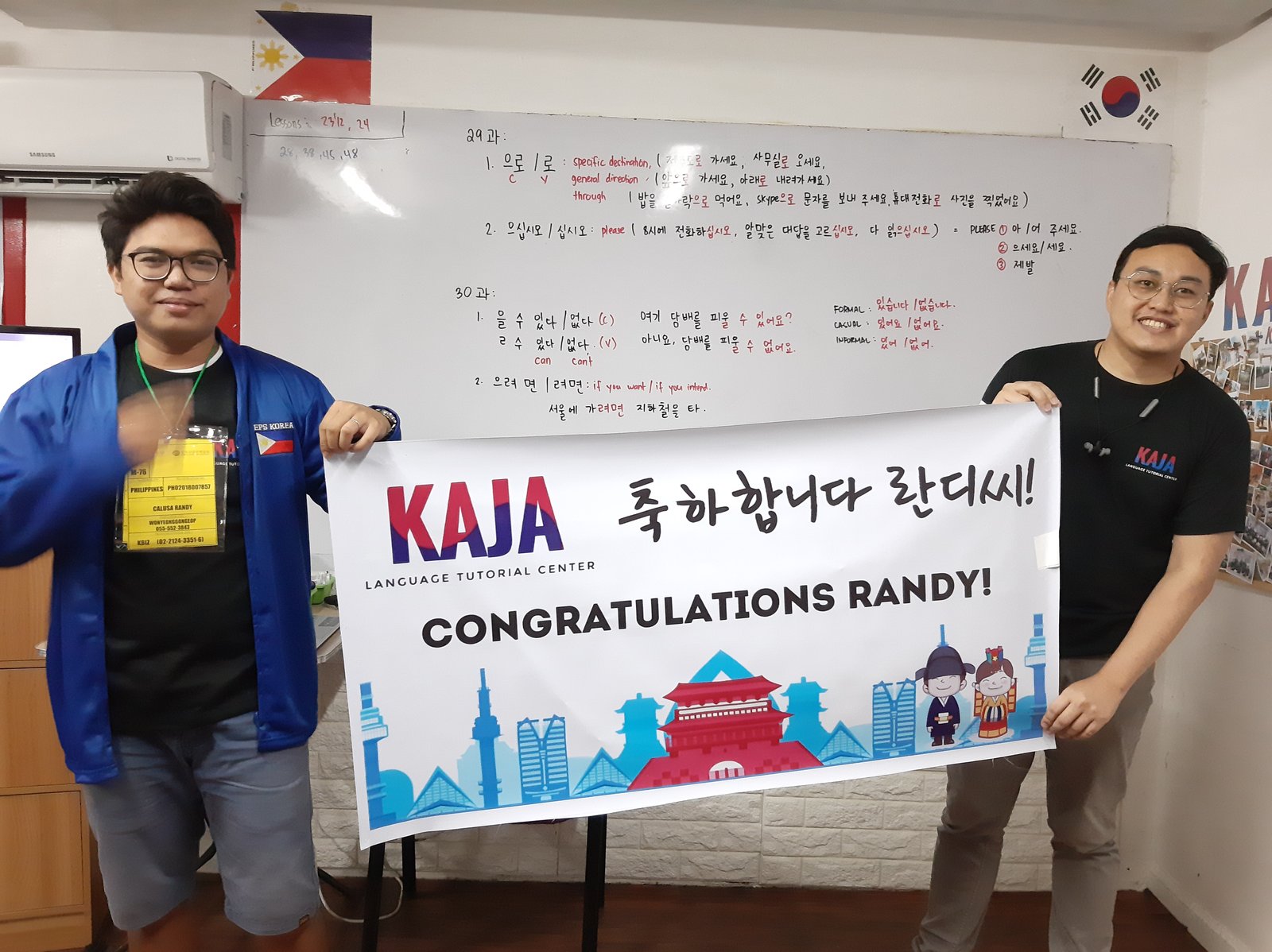
Celebrate the people who kept showing up, kept learning, and reached their next milestone.

Kaja offers Korean language classes for EPS and non-EPS learners. Contact the school to find the right starting point for you.
Yes. Kaja’s published programs include online and face-to-face classes. Ask the school about its next available schedule.
This page has a short sample question. Open Kaja Practice for full CBT and UBT mock exams, listening practice, skills guides, and interview preparation. No login is required.
No. Exam preparation supports your learning. Recruitment, selection, and employment follow the official EPS process.
Let’s find the class that feels right for you.
Registration will open soon. Please contact Kaja to reserve your place.
2/F 108 National Highway
Tunasan, Muntinlupa City
Across SM Tunasan
KAJA is grateful for the opportunities to contribute to educational institutions, organizations, and businesses through Korean language education, cultural activities, speaking engagements, judging, and professional collaborations.


